
Shop Now
- AJS Tool kits
- Beading
- Benches, Tools & Accessories
- Books, DVDs & Templates
- Burs & Drills
- Casting, Melting & Waxes
- Chains
- Cleaning
-
Display
- Acrylic Props, Busts & Boards - Black
- Acrylic Props, Busts & Boards - Clear
- Acrylic Props, Busts & Boards - Frosted
- Cases, Trays & Tray Inserts
- Jewellery Rolls
- Leatherette Props, Busts & Boards - Black
- Leatherette Props, Busts & Boards - Cream
- Leatherette Props, Busts & Boards - White
- Price Labels, Tags
- Clearance
- Dust Collection & Air Filtration Supplies
- Enamelling
-
FINDINGS - PEEKAYS
- Albert Swivel Clasps
- Bails
- Base Metal Findings
- Bayonet, Pendants & Other Fittings
- Bolt Rings
- Brooch Fittings
- Butterfly Earring Backs
- Chain Clasps - Parrot, Cartier, Lobster, Triggers
- Chain End Final/Caps
- Charms
- Cufflink Fittings
- Ear Clips
- Earring Fittings
- Jump Rings, Split Rings, Link Locks
- Pearl Fittings, Clasps, Enhancers & Beads
- Ring Clips
- Ring Settings
- Shepherd Hooks
- Sleepers
- Safety Chains
- Findings Kit
- Monthly Specials
- Clearance
- Flex Shafts & Micromotors
- Forming
- Gemmological
- Gemstones
- Gift Voucher
- Lapidary
- Lighting & Photography
- Magnifiers
- Mass Finishing
- Measuring: Gauges, Scales
- Metal: Sheet, Wire, Tube, Testing
- Microscopes
- Permanent Jewellery
- Plating, Colouring & Patinas
- Polishing & Abrasives
- Pottery Equipment
- Presentation Packaging
- Safety
- Sandblasting
- Setting & Engraving
- Soldering & Welding
- Stamping
- Watch Bands - EOL Clearance
- Watchmakers
- 3D Jewellery CAD Software
- 3D Printing



Silver Sheet, Wire, Chenier & Granules — Your Complete Jewellery Metals Guide
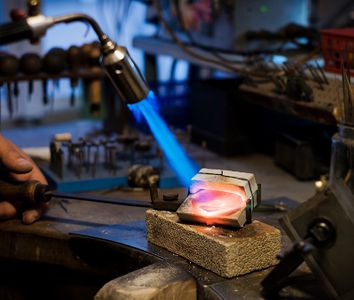
What is the difference between silver sheet, wire, chenier and granules?
From fabrication to casting, the form of silver you choose makes a big difference to your jewellery’s strength, finish and efficiency. At Australian Jewellers Supplies (AJS), our Silver Sheet, Wire, Chenier & Granules range provides high-quality options made for precision and consistency. In this article, we’ll explain the differences, when to use each form, practical tips and links to recommended products.
Why do jewellers choose silver?
Silver remains one of the most popular metals for jewellery making because of its:
- Workability – sterling silver (92.5% silver) is easy to form, solder and texture.
- Finish – it polishes to a bright reflective finish and accepts patinas nicely.
- Value – more cost-effective than gold or platinum for learning, prototyping and manufacturing.
- Availability – AJS stocks a wide range of sizes and profiles for fast delivery across Australia.
Browse the full range ➜ Silver Sheet, Wire, Chenier & Granules
How do you choose the right silver sheet for jewellery making?
Silver Sheet
Best for: pendants, backplates, cuffs, bezels and textured panels.
About: Silver sheet gives you a flat surface or structural element to cut, form and finish. The gauge (thickness) matters: too thin and it flexes; too thick and it becomes hard to shape.
Workshop tips:
- Anneal after cold-working to avoid cracking.
- Clean thoroughly and apply flux carefully to reduce firescale.
- Add texture (hammering/rolling) before shaping for better results.
Recommended product: 925 Sterling Silver Sheet
Which silver wire should I use for my jewellery project?
Silver Wire
Best for: ring shanks, jump rings, settings, frames and decorative elements.
About: Wire comes in round, square, and half-round profiles and in different tempers (dead-soft vs half-hard) depending on forming needs.
Quick guide: jewelryclasseswithjen.com+1
- Round wire: general use, easy to form.
- Square wire: crisp edges, structural.
- Half-round: ideal for rings and bezels.
Workshop tips: - Use half-hard wire for wearables; dead-soft for forming/wrapping.
Recommended products:
Sterling Silver Round Wire
Sterling Silver Square Wire
What is silver chenier, and when should you use it?
Silver Chenier (Tube)
Best for: settings, hinge components, lightweight frames, gallery work.
About: Chenier (tube) allows the creation of hollow structural or decorative elements — lighter but still strong.
Workshop tips:
- When bending a tube, support the interior (sand-fill or wire) to avoid buckling or kinks.
- Anneal before forming; cut ends precisely for good solder joints.
Recommended product: 925 Sterling Silver Chenier
How do jewellery makers use silver granules and why?
Silver Granules
Best for: casting, granulation techniques, and recycling off-cuts into stock for rolling or drawing.
About: Granules are small bits of silver (fine or sterling) used for melting. They offer efficiency for melting, smaller cast runs and repurposing waste.
Workshop tips:
- Use a clean crucible, proper flux and control your heat for even melting.
- Pre-heat your mould, pour carefully, then pickle and brush after casting to remove oxidation.
Recommended product: Fine Silver Granules
Which form of silver is best for my project?
|
Project Type |
Best Form |
Key Considerations |
|
Pendant / Backplate |
Sheet |
Gauge matched to strength & texture before forming. |
|
Ring / Bangle |
Wire |
Choose a gauge & temper suited to wearability. |
|
Gallery / Frame |
Chenier |
Match wall thickness; maintain clean cuts & joints. |
|
Casting / Recycling |
Granules |
Efficient melt; minimal waste; control the size of pour. |
Practical tips for working with silver
- Anneal regularly: relieve stress in the sheet/wire after forming.
- Clean thoroughly: before soldering for strong joins and minimal defects.
- Use correct ventilation: especially when melting or soldering.
- Avoid firescale: sterling contains copper, so oxidation is possible — pickling and flux help.
- Recycle off-cuts: melt scrap sheet/wire into granules to reduce material waste.
- Store properly: Use airtight containers or anti-tarnish strips to keep silver bright.
Shop the full range
Explore AJS’s complete range of Silver Sheet, Wire, Chenier & Granules, available in multiple profiles, gauges and alloys — ideal for students, bench jewellers and manufacturers alike.
Shop the silver range at AJS
Need a bulk size or custom cut? Contact your nearest AJS branch or email info@jewellerssupplies.com.au — we’re here to help.